
How General And Cosmetic Dentists Evaluate Craze Lines Before Recommending Smile Enhancements
You catch a thin line in the mirror, tilt your head, and wonder if your tooth is cracking or if it only looks that way under the bathroom light. That moment can spiral fast. If you have been thinking about whitening, bonding, veneers, or another cosmetic update, those faint lines can make you pause. You do not want to spend money on a better smile only to learn there was a hidden problem underneath. That is why it helps to see a dentist serving Plymouth, MA families before moving forward with cosmetic treatment.
That concern is valid. Craze lines are common, and in many cases they are harmless surface marks in the enamel. They are not always the same as structural cracks, though, and that difference matters before any smile work begins. A general and cosmetic dentist usually looks at where the lines sit, how deep they seem, whether you have pain or bite issues, and whether a cosmetic treatment could make the tooth look better or place more stress on it.
Craze lines and tooth cracks do not mean the same thing
Most craze lines are tiny lines in the outer enamel. They often show up with age, pressure from clenching, minor wear, or years of normal use. A true crack can extend deeper and may affect the dentin or even the pulp. That changes everything, because cosmetic treatment on a compromised tooth can hide a problem instead of solving it.
This is why how general and cosmetic dentists evaluate craze lines before recommending smile enhancements matters so much. The goal is not just to make teeth look brighter or smoother. The goal is to protect the tooth first, then choose a treatment that fits what is actually happening below the surface.
Researchers supported by the National Institute of Dental and Craniofacial Research have explored what helps keep teeth strong, which reinforces a simple point. Teeth are durable, but they are not indestructible. A line you barely notice today may stay cosmetic for years, or it may point to habits and stress that deserve attention before elective treatment.
General and cosmetic dentist evaluations focus on symptoms, depth, and bite pressure
A dentist usually starts with your symptoms. If the tooth has no pain, no sensitivity when you bite, and no reaction to hot or cold that lingers, the line is more likely to be superficial. If you feel a sharp zing when chewing, if the tooth feels different when you release pressure, or if cold sensitivity has increased, the concern shifts toward a deeper crack.
Visual inspection comes next. Some craze lines are only visible when the tooth is dried or lit from a certain angle. Others run in a pattern that suggests normal enamel wear. A darker line, a line that catches stain, or one paired with a chipped edge may need closer study. Dentists may use magnification, transillumination, bite tests, and x rays, although x rays do not always show small cracks clearly.
Bite pressure is another major part of the exam. If you grind at night, clench during the day, or have an uneven bite, those forces can turn a small enamel line into something more serious over time. That is one reason a cosmetic dentist craze line evaluation is not just about looks. It is also about the habits and mechanics that led to the line in the first place.
For some people, the line itself is not the main issue. The real issue is whitening on a tooth with uneven enamel, bonding on a tooth under heavy bite stress, or veneers on teeth that already show signs of crack progression. A careful dentist slows the process down here. That can feel frustrating when you came in wanting a fast cosmetic fix, but it often saves you from repeat work and more cost later.
Smile enhancements are safer when the tooth is stable first
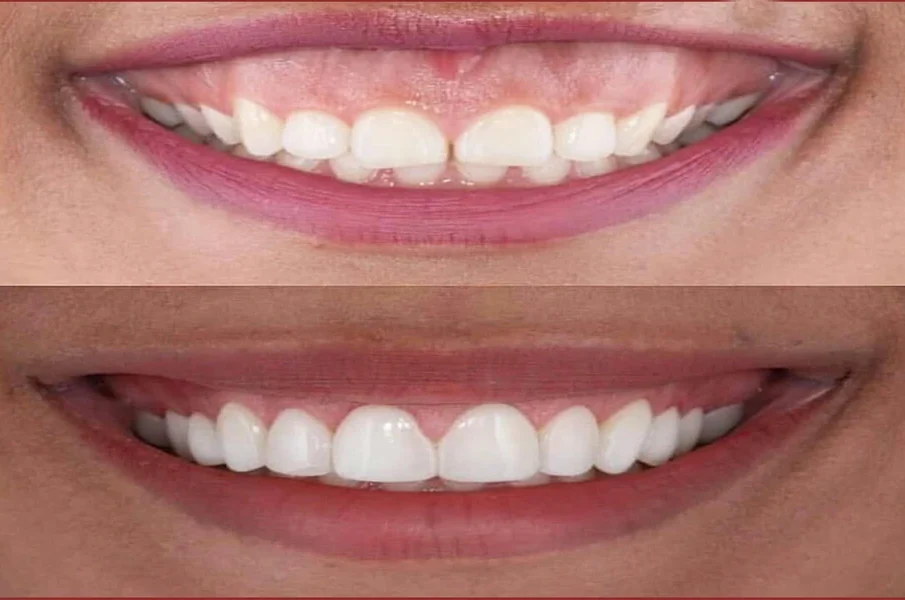
If the line is superficial, treatment may be simple or not needed at all. Some patients do well with monitoring, especially if the line is only visible in certain light. If appearance is the concern, polishing, whitening, bonding, or veneers may be discussed depending on how visible the line is and how much enamel remains.
If the tooth shows signs of deeper damage, the plan changes. Cosmetic work may be delayed while the dentist protects the tooth with a night guard, reshapes a high bite contact, places a crown, or refers for root canal care if the nerve is involved. According to MedlinePlus guidance on cracked teeth, symptoms and treatment depend on how far the crack extends, which is exactly why a surface line should never be judged by appearance alone.
Craze lines before cosmetic dental treatment are not automatic red flags. They are signals to examine the tooth with more care. Sometimes the answer is yes to smile enhancement. Sometimes the answer is not yet.
Professional evaluation gives clearer answers than guesswork
| Concern | At Home Guess | Professional Dental Evaluation |
|---|---|---|
| Is it a harmless craze line or a deeper crack? | Based on mirror view or internet photos | Exam, lighting, magnification, bite testing, symptom review |
| Will whitening make it look worse? | Hard to predict | Dentist assesses stain, enamel condition, and cosmetic goals |
| Can bonding or veneers cover it safely? | Often assumed yes | Depends on crack depth, bite force, and remaining tooth structure |
| Why does the tooth feel sore sometimes? | Easy to dismiss as sensitivity | Can point to bite stress, crack symptoms, or pulp irritation |
| Will the problem get worse? | Unknown | Risk judged by line pattern, habits, and tooth function |
Small steps now can protect your smile and your budget
Track what you feel. Notice whether the tooth reacts to cold, sweets, chewing, or pressure release. Write down when it happens and whether it is getting more frequent. Those details help a general and cosmetic dentist separate a cosmetic enamel line from a more active crack problem.
Pause major cosmetic treatment until the tooth is checked. If you were planning whitening strips, bonding, or veneers, hold off until the tooth is examined. A tooth that looks fine in photos can still have stress patterns that change the treatment plan.
Address bite stress early. If you wake with jaw tension, headaches, or worn edges on your teeth, mention it. Clenching and grinding often sit in the background when craze lines appear. Managing that pressure can protect both your natural teeth and any cosmetic work you choose later.
A careful plan leads to better smile enhancements
Seeing lines in your teeth can make you fear the worst, especially when you were hoping to improve your smile, not add another dental problem to your list. In many cases, craze lines are manageable and mostly cosmetic. The key is getting the right diagnosis before moving forward with any treatment that changes the tooth’s surface or shape.
A thoughtful general and cosmetic dentist looks past the line itself and checks the strength, symptoms, and bite forces around it. That is how smile enhancements stay both attractive and durable. If you have noticed craze lines and are thinking about improving your smile, schedule an evaluation and get a plan built on what your teeth actually need.


